
SO if we use a Phone or Bank = WE HAVE NO RIGHT TO PRIVACY = OUR FOUNDERS CRINGE!
HOW ABSURD IS THAT?


MANY WAYS TO TRACK AQ attacks without spying on every American citizen and COLLUDING with major corporations to do it.
Constitutionality of the bulk telephony meta-data program
4th Amendment: “The right of the people to be secure in their papers, houses, persons, and effects, against unreasonable searches and seizures, shall not be violated.”
Supreme Court = a search of a person’s home, office, car, briefcase, pocket, mail, suitcase, etc. is presumptively “unreasonable” and therefore unconstitutional GOV has probable cause the search will discover evidence relating to suspected crime.
Bulk meta-data program collection of an individual’s telephone call records a “SEARCH” of that individual within the meaning of the Fourth Amendment?
1928 Olmstead v. USA the Supreme Court said wiretapping does NOT constitutes a “search” with strong dissents of Justices Louis Brandeis and Oliver Wendell Holmes.
1928 A “search” = a physical intrusion into a physical space owned or controlled by the person searched = 4th Amendment = does not invade any physical space owned or controlled by the individual.
AMAZING in 1928 bulk telephony meta-data program would not be a “search” because the PHONE COMPANY LET US DO IT!
1967 Supreme Court overruled Olmsted in Katz v. USA that the 4th Amendment “protects people, not places” so GOV can NOT engage in a “search” if its actions violate society’s “reasonable expectations of privacy” = invade privacy by intercepting their phone calls = WARRANT NEEDED!
1967 Court = Wiretapping = A “search” within the meaning of the Fourth Amendment = new forms of technology considered
1967 what does “reasonable” mean?
1976 USA v. Miller = Individual has no reasonable expectation of privacy in his bank records, because he knowingly discloses his financial transactions to his bank
1979 Smith v. Maryland (1979) = Individual has no reasonable expectation of privacy in his telephone company’s records of his phone calls, because he knowingly discloses his calling data to his phone company
1976 & 1979 = GOV can get telephone company calling records = NOT A SEARCH = no “reasonable expectation of privacy” in those records = made NSA’s bulk telephony meta-data program possible.
NSA QUANTUM PROGRAM = PLANTED SECRET SOFTWARE ON 100,000 computers OVER NETWORKS around the world to carry out surveillance and provide a digital highway for cyberattacks
Secret technology = Allows NSA to enter even computers not connected to the Internet beginning in 2008 USING COVERT RADIO WAVES from tiny circuit boards and USB cards inserted in the computers.
Obama unveils Friday a series of reforms that gives Americans more confidence their privacy is protected.
MORE ON BUSH SPYING ON AMERICANS WHEN IT WAS CONSIDERED lLLEGAL!
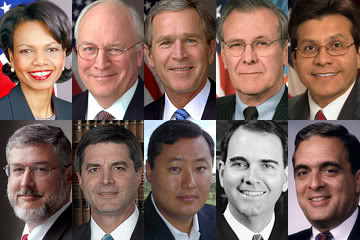
SNOWDEN DOCUMENT shows BUSH 1st TERM FAUGHT FOR QUESTlONABLE JUSTlFlCATlON TO COLLECT META DATA ON AMERICANS IN 2002.
Process = GOV lawyers, judges + Private lawyers who believed Bush stepped over legal line
NSA Sept 14, 2001 targeted communications between US and Afghanistan
CHAINY asked NSA’s Hayden to do MORE!
NSA found FISA process too cumbersome but rather than asking Congress to amend FISA:
Oct 4, 2001 Bush took the law into his own hands and gave NSA broad authority to intercept telephone and Internet communications if at least one party to the communication was located outside the United States.
Addington drafted the BUSH LAW BREAKING document defending the legality of wiretapping based on Bush’s Authorization.
BUSH refused 2 NSA lawyer requests to see this document
Addington did “read a few paragraphs of the opinion” over the phone to NSA’s Deitz.
NSA’s inspector general found it “strange that NSA was told to execute a secret program that everyone knew presented legal questions, without being told the underpinning legal theory.”
NSA surveillance required private-sector telecommunications companies and 4 firms readily agreed.
3 refused the idea of violating their customers’ privacy without a court order.
BUSH bypassed FISA Court 3 MONTHS until Jan. 31, 2002.
March 2004, DOJ said one part of the NSA’s surveillance program “was prohibited by the terms of FISA and Title III.”
March 11, 2002 BUSH had the White House Counsel sign an Authorization for the program, instead of the Attorney General, on March 11 – BYPASSING DOJ
March 19, 2002 8 Days later BUSH changed his mind and ordered the collection of bulk Internet metadata halted.
3 surveillance programs on telephone metadata and the content of phone calls and Internet communications — were allowed to continue after March 2004.
July 2002 Bush resumed META DATA COLLECTION after convincing Judge Kotelly to sign off on a new legal justification for the program.
DOJ said new legal foundations for these programs were needed and “DOJ and NSA needed to find a legal theory that would allow NSA (to continue) NSA had serious reservations about whether it would be possible to find a workable solution using a FISC order at that time.”
In 18 Months DOJ lawyers finally found a solution that FISC accepted and grant a court order for permission to intercept the communications of thousands of people with a single FISA order on foreign targets.
FISA rejected this for targeting Americans, forcing the government to begin seeking conventional FISA orders to intercept Americans’ international communications.
Opponents of Bush’s surveillance programs have still not had an opportunity to challenge them in court.
The sheer number of people, including company lawyers, (EVEN) DOJ lawyers, and the FISC itself, suggests the Bush-era spying programs were on shaky legal ground.
THE BUSH White House had stepped over the line.
 Concise Politics -- Your Time should NOT be wasted.