Unknown's avatar

Saint Bede — English Monk (672-735) that wrote Early History of England

Saint Bede — English Monk (672-735) that wrote Early History of England

Bede (672-735), a famous English monk author, known as Saint Bede, he wrote and worked at the monastery of St. Peter & St. Paul in Northumbria (today’s Tyne & Wear, England). His most famous work, Ecclesiastical History of the English People gained him the title “The Father of English History”.
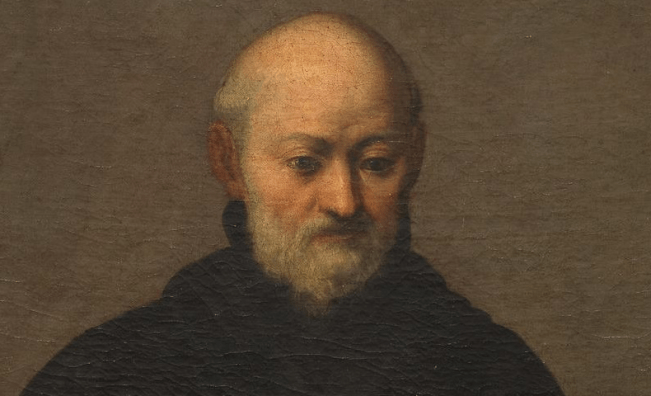
Saint Bede = One of the few written histories of the early Dark Age

Click for Source Article on Bede (672-735) Famous English Monk that wrote History of England

Bede, a skilled linguist and translator, finishing his translation of the Gospel of John on his deathbed & was respected and referenced by Catholics and Lutherans during the bloody Wars of Religions. He undoubtedly contributed to English Christianity. Bede’s was fortunate that his monastery had access to an impressive library of 200 books (a lot for the time) which included works by Eusebius, Orosius, and many others.

1899 Bede’s scholarship was recognized when he was declared a Doctor of the Church, as the only Englishman to receive that honor from the Catholic Church.

731 Bede’s life is contained in the last chapter of his Ecclesiastical History of the English People, a history of the church in England was completed when he was 59. Bede was connected to men of noble ancestry which suggest that his childhood family was well-to-do and came from a noble family with Anglo-Saxon heritage. He was well-educated at the same monasteries he worked throughout his life. The monastery had an excellent library of 200 books (big for the time) and was a renowned centre of learning.

597 Bede drew on earlier writers and had access to two works of Eusebius: the Historia Ecclesiastica, and also the Chronicon in a Latin translation. He also knew Orosius’s Adversus Paganus, and Gregory of Tours’ Historia Francorum, both Christian histories, & the work of Eutropius, a pagan historian. He used Constantius’s Life of Germanus as a source for Germanus’s visits to Britain. Bede’s account of the invasion of the Anglo-Saxons is drawn largely from Gildas’s De Excidio et Conquestu Britanniae. Bede would also have been familiar with more recent accounts such as Eddius Stephanus’s Life of Wilfrid, and anonymous Lives of Gregory the Great and Cuthbert. He also drew on Josephus’s Antiquities, and the works of Cassiodorus, and there was a copy of the Liber Pontificalis in Bede’s monastery. Bede quotes from several classical authors, including Cicero, Plautus, Terenceclear, Virgil, Pliny the Elder, and the works of Dionysius Exiguus. Some of Bede’s material came from oral traditions, including a description of the physical appearance of Paulinus of York, who had died nearly 90 years before Bede’s Historia Ecclesiastica was written.

686 Plague broke out and Bede in “The Life of Ceolfrith”, written in about 710, records that only two surviving monks were left to deliver the liturgy service — Ceolfrith and the other a young boy, taught by Ceolfrith. The young boy was almost certainly Bede, who would have been about 14.

692 Bede, at 19, was ordained a deacon.

702 Bede, at 30, became a priest and finished his first works, the De Arte Metrica and De Schematibus et Tropis; both were intended for use in the classroom. He eventually wrote 60 books, most of which have survived. His last-surviving work is a letter to Ecgbert of York, a former student, written in 734. Bede may also have worked on one of the Latin bibles now in a Library in Florence.

708 Some monks at Hexham accused Bede of having committed heresy in his work De Temporibus, violating the standard view of world history in his Six Ages of the World by calculated the age of the world for himself, rather than accepting authority. He concluded that Christ had been born 3,952 years after the creation of the world, rather than the figure of over 5,000 years that was commonly accepted by theologians.

Except for a few visits to other monasteries, his life was spent in a round of prayer, observance of the monastic discipline and study of the Sacred Scriptures. He was considered the most learned man of his time, and wrote excellent biblical and historical books.

Bede says: “Prayers are hindered by the conjugal duty because as often as I perform what is due to my wife I am not able to pray.”

Bede wrote scientific, historical and theological works, reflecting the range of his writings from music and metrics to exegetical Scripture commentaries. He learned from writers like Pliny the Elder, Virgil, Lucretius, Ovid, Horace and other classical writers. His history includes accounts of miracles, which to modern historians has seemed at odds with his critical approach to the materials in his history, but such concepts played a major world-view for Early Medieval scholars.

Although Bede is mainly studied as a historian now, in his time his works on grammar, chronology, and biblical studies were as important.

731 Bede sketches the history of England, beginning with Caesar’s invasion in 55 BCE and a brief account of Christianity in Roman Britain to the martyrdom of St Alban to 597 story of Augustine’s mission to England that brought Christianity to the Anglo-Saxons.

604 The second book begins with the death of Gregory the Great follows the further progress of Christianity in Kent and the first attempts to evangelise Northumbria. 623 These ended in disaster when Penda, the pagan king of Mercia, killed the newly Christian Edwin of Northumbria at the Battle of Hatfield Chase. The setback was temporary, and the third book recounts the growth of Christianity in Northumbria under kings Oswald of Northumbria and Oswy.

His third Book – Climax is the account of the Council of Whitby, traditionally seen as a major turning point in English history.

His Fourth Book — Begins with the consecration of Theodore as Archbishop of Canterbury, and recounts Wilfrid’s efforts to bring Christianity to the kingdom of Sussex.

Bede’s Fifth Book – During his time, his story includes an account of missionary work in Frisia, and of the conflict with the British church over the correct dating of Easter. Bede’s preface mentions that King Ceolwulf received an earlier draft of the book. This correspondence with the king indicates that Bede’s monastery had excellent connections among the Northumbrian nobility.

Bede’s primary intention in Historia Ecclesiastica was to show the growth of the united church throughout England after the departure of the Romans.

Bede’s extensive use of miracles proves difficult for readers who consider him more or less a reliable historian. He was accurate and truthful about the historical events and traditions of Christian faith that continues to the present day believing faith is brought about by miracles.

Bede’s account of the early migrations of the Angles and Saxons to England omits any mention of peoples crossing the channel from Brittany. The omission was “a scholar’s dislike of the indefinite” and could not be dated.

Bede in the story of Augustine’s mission from Rome tells how the British clergy refused to assist Augustine in the conversion of the Anglo-Saxons.

Bede’s Historia Ecclesiastica was copied often in the Middle Ages, and about 160 manuscripts containing it survive with 50% located on the European continent, rather than England.

Bede’s focus on the history of the organization of the English church, led him to exclude the secular history of kings and kingdoms except where a moral lesson could be drawn or where they illuminated events in the church. His works were used by both Protestant and Catholic sides in the BLOODY Wars of Religion.

Bede’s accounts of Germanic invaders in Kent should not be considered to relate what actually happened, but rather relates myths that were current in Kent during Bede’s time.

It is likely that Bede’s work, because it was so widely copied among elitists, discouraged others from writing histories and may even have led to the disappearance of manuscripts containing older historical works. Bede’s theological works circulated widely in the Middle Ages among the elitists.

Bed’e Old Testament works included Commentary on Samuel, Genesis, Ezra and Nehemiah, On the Temple, On the Tabernacle, Tobit, Proverbs, Song of Songs, and Canticle of Habakkuk.

Bede’s works on New Testament included Commentary on Revelation, Epistles, Acts, Mark, Luke, and John.

703 On Time, written provides an introduction to the principles of calculating date of Easter. 723 Bede wrote a longer work on the same subject. Bede’s did work on astronomical timekeeping in On the Nature of Things and calculated his date for Easter. In Switzerland a monk wrote that “God, the orderer of natures, who raised the Sun from the East on the fourth day of Creation, in the sixth day of the world has made Bede rise from the West as a new Sun to illuminate the whole Earth”.

Bede was familiar with pagan authors such as Virgil, but it was not considered appropriate to teach about the Bible from such texts.

900s Bede’s cult became prominent in England during the revival of monasticism, and by the 14th century had spread to many of the cathedrals of England.

Unknown's avatar

Who was behind the Balfour Declaration? BALFOUR UNFURLED!

Who was behind the Balfour Declaration? BALFOUR UNFURLED!

SHORT ANSWER: ROTHSCHILDS & WEISMANN = SOLD to GUARD Suez Canal!

Chaim Weizmann = ZIONIST-NAZI THAT STARTED THE GENOCIDE IN PALESTINE = FIRST PRESIDENT OF TERRORIST STATE!

Click for Source Article on BALFOUR UNFURLED!

BRITISH-SWISS ROTHSCHILDS CRIME SYNDICATE = FUNDS ALL ZIONIST-NAZI TERRORISM

Theodore Herzl = “father of political Zionism”

Chaim Weizmann = PUT ZIONIST-NAZI TERRORISM INTO ACTION = RUSSIAN ASHKE-NAZI & First president of Israel = Most influential in Balfour Declaration that CREATED ISRAELI TERRORISTS

Chaim Weizmann = BRITISH CITIZEN + SCHOOL on EXPLOSIVES in Switzerland + WW II HE WORKED FOR BRITISH GOVERNMENT IN EXPLOSIVES & Connected to British Prime Minister David Lloyd George & ex-secretary Arthur Balfour

Lloyd George wrote the Balfour Declaration was offered to Weizmann as a reward for his EXPLOSIVES & Rothschild & Weizmann drafted the Declaration to suit Zionist interests.

Weizmann = 2+ years – Lobbied publicly hard to commit British to PUTTING ISRAEL ON TOP OF PALESTINE = Said a Jewish state was in the interest of British = PROTECT SUEZ CANAL!

—————————-▶

12.5 minute video — GUESS WHO INVENTED MODERN DAY TERRORISM?

FALSE FLAGS NOW IN LAS VEGAS, MANCHESTER (LIKE PARIS & SAN BERNARDINO) GETTING SLOPPIER EACH TIME OR WE ARE GETTING SMARTER! = THEY MUST BE STOPPED!

ROTHSCHILDS MAFIA INVENTED TERRORISM WHEN THEY ROBBED PALESTINIANS OF THEIR LIVES! = ROTHSCHILDS BALFOUR DECLARATION!

1967 ISRAELI TERRORISTS ATTACH US SHIP MURDERING AMERICAN CREW MEMBERS = USS LIBERTY

2001 ISRAELIS MASS MURDERED ALMOST 3,000 AMERICANS!

IF VIDEO BLOCKED CLICK HERE: https://drive.google.com/file/d/0BxDjOJMf0GsmUVFGYW5tV01wTW8/view?usp=sharing

—————————-▶

1914 Weizmann letter to The Guardian = “Should Palestine fall within the British sphere of influence…we could have in 20 to 30 years a million Jews out there – perhaps more; they would develop the country, BRING BACK CIVILIZATION (????) TO IT and form a very effective guard for the Suez Canal.

1914 Weizmann in The Guardian = “Palestine fall within the British…a million Jews (to) BRING BACK CIVILIZATION…guard for Suez.” = Colonial Views

1940 Palestinian Christian Wedding BEFORE ASKE-NAZIS

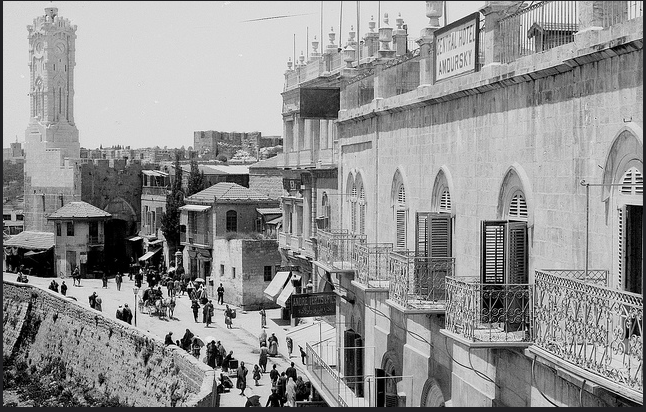
1900 Palestine before ASHKE-NAZIS

Palestine in 1907 before ASHKE-NAZIS

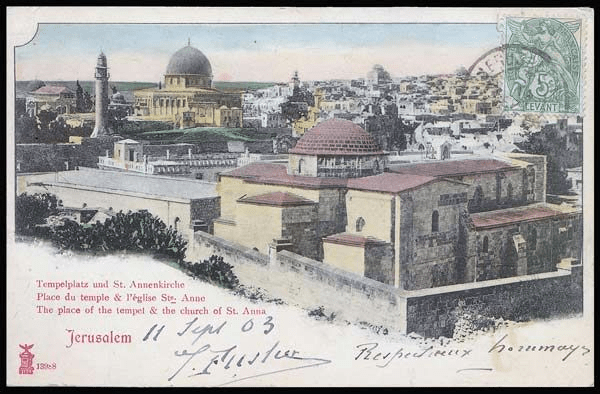
Palestine in 1903 before ASHKE-NAZIS

1907 Weizmann Scopes out PALESTINE TO ROB FOR HIS CRIMINAL NATION OF ISRAEL = Said Palestine “…city settlements in any way resembled, as far as vigor, tone and progressive spirit are concerned, the colonies and settlements of our day.”

THE ASHKE-NAZI MYTH OF A “LAND WITHOUT

PEOPLE FOR A PEOPLE WITHOUT LAND”

1919 Weizmann said: “By a Jewish National Home I mean…Palestine shall be as Jewish as England is English…” = A RACIST STATEMENT IF EVER THERE WAS ONE!

Unknown's avatar

WORLD DICTATORSHIP = THE COMMITTEE OF 300 LED BY BRITISH-SWISS ROTHSCHILDS CRIME SYNDICATE

WORLD DICTATORSHIP = THE COMMITTEE OF 300 LED BY BRITISH-SWISS ROTHSCHILDS CRIME SYNDICATE

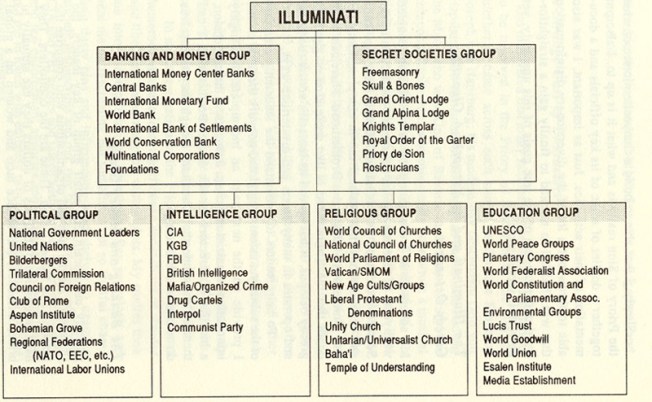
Illuminati Leak: Full List of Recent Members of Secret Society Exposed as ‘Committee Of 300’. Oct 29, 2017

Click for Source Article on Committee of 300

Rothschild, Jacob – 4th Baron Rothschild
De Rothschild, Benjamin
De Rothschild, David René James
De Rothschild, Evelyn Robert
De Rothschild, Leopold David
Rockefeller, David Jr.
Rockefeller, David Sr.
Rockefeller, Nicholas

Queen Elizabeth II
Beatrix (Queen)
Sofía (Queen) of Spain
Margrethe II Queen of Denmark
Carlos, Juan – King of Spain
Albert II of Ex-King of Belgium
Michael of King of Romania
Constantine II Ex-King of Greece
Abdullah II of King of Jordan

Archduchess Regina, Crown Princess of Austria, Hungary, and Bohemia
Margherita – Archduchess of Austria-Este
Emanuele, Vittorio – Prince of Naples, Crown Prince of Italy
Philip (Prince) – Duke of Edinburgh
Charles – Prince of Wales
Edward (Prince) – Duke of Kent
William (Prince) of Wales
Willem-Alexander – Prince of Orange
Edward (The Prince) – Earl of Wessex
Hans-Adam II – Prince of Liechtenstein
Alexander – Crown Prince of Yugoslavia
Constantijn (Prince) of the Netherlands
Alexandra (Princess) – The Honourable Lady Ogilvy
Andrew (Prince) – Duke of York
Anne – Princess Royal
Leka, Crown Prince of Albania
August, Ernst – Prince of Hanover
Mabel (Princess) of Orange-Nassau
Bernhard (Prince) of Lippe-Biesterfeld
Massimo, Stefano (Prince) – Prince of Roccasecca dei Volsci
Michael (Prince) of Kent
Richard (Prince) – Duke of Gloucester
Moritz – Prince and Landgrave of Hesse-Kassel
Christoph, Prince of Schleswig-Holstein
Colonna, Marcantonio (di Paliano) – Prince and Duke of Paliano
Friedrich, Georg – Prince of Prussia
Friso (Prince) of Orange-Nassau
Lorenz (Prince) of Belgium, Archduke of Austria-Este
Ruspoli, Francesco – 10th Prince of Cerveteri
Fabrizio (Prince) – Massimo-Brancaccio
Pope Francis

Sassoon, James Meyer – Baron Sassoon
Levene, Peter – Baron Levene of Portsoken
Levy, Michael – Baron Levy
Carington, Peter – 6th Baron Carrington
Stevenson, Dennis – Baron Stevenson of Coddenham
Williams, Shirley – Baroness Williams of Crosby
Wilson, David – Baron Wilson of Tillyorn
Woolf, Harry – Baron Woolf
Henri – Grand Duke of Luxembourg
Alphonse, Louis – Duke of Anjou
Borwin – Duke of Mecklenburg
Carlos – Duke of Parma
Pio, Dom Duarte – Duke of Braganza
Sigismund (Archduke) – Grand Duke of Tuscany
Franz, Duke of Bavaria
Grosvenor, Gerald – 6th Duke of Westminster
Camilla – Duchess of Cornwall
Vladimirovna, Maria – Grand Duchess of Russia
Ogilvy, David – 13th Earl of Airlie
Astor, William Waldorf – 4th Viscount Astor

Soros, George
Kissinger, Henry
Clark, Wesley Kanne Sr. (General)
Murdoch, Rupert
Blankfein, Lloyd
Schwarzman, Stephen A.
Bernake, Ben
Ballmer, Steve
Bloomberg, Michael
Buffet, Warren
Gates, Bill
Bronfman, Edgar Jr.
Bronfman, Charles Rosner
Stiglitz, Joseph E.
Krugman, Paul
Kerry, John Forbes
Gorbachev, Mikhail
Gore, Al
Blair, Tony
Bush, George HW
Powell, Colin
Rice, Susan

Holbrooke, Richard
Lieberman, Joe
Brzezinski, Zbigniew
Sarkozy, Nicolas
Oppenheimer, Nicky
Sassoon, Isaac S.D.
Abramovich, Roman Arkadyevich
King, Mervyn
Ackermann, Josef
Kinnock, Glenys
Adeane, Edward
Agius, Marcus Ambrose Paul
Knight, Malcolm
Ahtisaari, Martti Oiva Kalevi
Koon, William H. II
Akerson, Daniel
Kufuor, John
Lajolo, Giovanni
Lake, Anthony
Lambert, Richard
Amato, Giuliano
Lamy, Pascal
Anderson, Carl A.
Landau, Jean-Pierre
Andreotti, Giulio
Laurence, Timothy James Hamilton
Leigh-Pemberton, James
Anstee, Nick
Leonard, Mark
Ash, Timothy Garton
Leviev, Lev
Levitt, Arthur
Aven, Pyotr
Balkenende, Jan Peter
Livingston, Ian
Balls, Ed
Loong, Lee Hsien
Barroso, José Manuel
Louis-Dreyfus, Gérard
Belka, Marek
Bergsten, C. Fred
Mandelson, Peter Benjamin
Berlusconi, Silvio
Manning, Sir David Geoffrey
Bernstein, Nils
Martínez, Guillermo Ortiz
Berwick, Donald
Mashkevitch, Alexander
Bildt, Carl
Bischoff, Sir Winfried Franz Wilhen “Win”
McDonough, William Joseph
McLarty, Mack
Mersch, Yves
Blavatnik, Leonard
Bolkestein, Frits
Miliband, David
Bolkiah, Hassanal
Miliband, Ed
Bonello, Michael C
Mittal, Lakshmi
Bonino, Emma
Moreno, Glen
Boren, David L.
Napoléon, Charles
Nasser, Jacques
Bruton, John
Niblett, Robin
Nichols, Vincent
Budenberg, Robin
Nicolás, Adolfo
Noyer, Christian
Ofer, Sammy
Cameron, David William Donald
Ollila, Jorma Jaakko
Cardoso, Fernando Henrique
Osborne, George
Oudea, Frederic
Parker, Sir John
Carney, Mark J.
Patten, Chris
Carroll, Cynthia
Pébereau, Michel
Caruana, Jaime
Penny, Gareth
Castell, Sir William
Peres, Shimon
Chan, Anson
Chan, Margaret
Chan, Norman
Pöhl, Karl Otto
Chartres, Richard
Prokhorov, Mikhail
Chiaie, Stefano Delle
Quaden, Guy Baron
Chipman, Dr John
Rasmussen, Anders Fogh
Chodiev, Patokh
Reuben, David
Cicchitto, Fabrizio
Reuben, Simon
Rhodes, William R. “Bill”
Clarke, Kenneth
Clegg, Nick
Clinton, Bill
Rifkind, Sir Malcolm Leslie
Cohen, Abby Joseph
Ritblat, Sir John
Cohen, Ronald
Roach, Stephen S.
Cohn, Gary D.
Robinson, Mary
Cooksey, David
Rodríguez, Javier Echevarría
Cowen, Brian
Rogoff, Kenneth Saul “Ken”
Craven, Sir John
Roth, Jean-Pierre
Crockett, Andrew
Dadush, Uri
Rubenstein, David
D’Aloisio, Tony
Rubin, Robert
Darling, Alistair
Davies, Sir Howard
Safra, Joseph
Davignon, Étienne
Safra, Moises
Davis, David
Sands, Peter A.
Sawers, Sir Robert John
Deiss, Joseph
Scardino, Marjorie
Deripaska, Oleg
Schwab, Klaus
Dobson, Michael
Schwarzenberg, Karel
Draghi, Mario
Du Plessis, Jan
Shapiro, Sidney
Dudley, William C.
Sheinwald, Nigel
Duisenberg, Wim
Simeon of Saxe-Coburg and Gotha
Snowe, Olympia
Elkann, John
Specter, Arlen
Feldstein, Martin Stuart “Marty”
Stern, Ernest
Festing, Matthew
Fillon, François
Steyer, Tom
Fischer, Heinz
Fischer, Joseph Martin
Strauss-Kahn, Dominique
Fischer, Stanley
Straw, Jack
FitzGerald, Niall
Sutherland, Peter
Tanner, Mary
Fridman, Mikhail
Tedeschi, Ettore Gotti
Thompson, Mark
Thomson, Dr. James A.
Tietmeyer, Hans
Geidt, Christopher
Trichet, Jean-Claude
Geithner, Timothy
Tucker, Paul
Gibson-Smith, Dr Chris
Van Rompuy, Herman
Vélez, Álvaro Uribe
Verplaetse, Alfons Vicomte, ex-Governor of the National Bank of Belgium
Gotlieb, Allan
Villiger, Kaspar
Green, Stephen
Greenspan, Alan
Volcker, Paul
Von Habsburg, Otto
Gurría, José Ángel
Waddaulah, Hassanal Bolkiah Mu’izzaddin
Gustaf, Carl XVI of Sweden
Walker, Sir David Alan
Hague, William
Wallenberg, Jacob
Hampton, Sir Philip Roy, Chairman of GlaxoSmithKline
Walsh, John
Warburg, Max, Deputy Chairman of Supervisory Board, M.M.Warburg & CO (AG & Co.)
Harald V Norway
Weber, Axel Alfred
Harper, Stephen
Weill, Michael David
Heisbourg, François
Wellink, Nout
Whitman, Marina von Neumann
Hildebrand, Philipp
Hills, Carla Anderson
Williams, Dr Rowan
Honohan, Patrick
Howard, Alan
Ibragimov, Alijan
Wolfensohn, James David
Ingves, Stefan Nils Magnus
Wolin, Neal S.
Isaacson, Walter
Jacobs, Kenneth M.
Woolsey, R. James Jr.
Julius, DeAnne
Worcester, Sir Robert Milton
Juncker, Jean-Claude
Wu, Sarah
Kenen, Peter
Zoellick, Robert Bruce